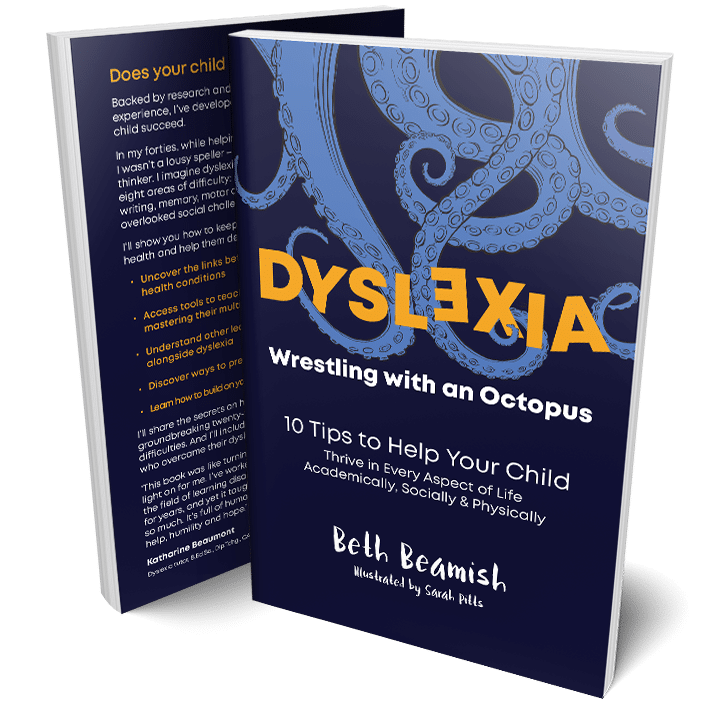
Thanks to dyscalculia tutor Katharine Beaumont for her help with this post.
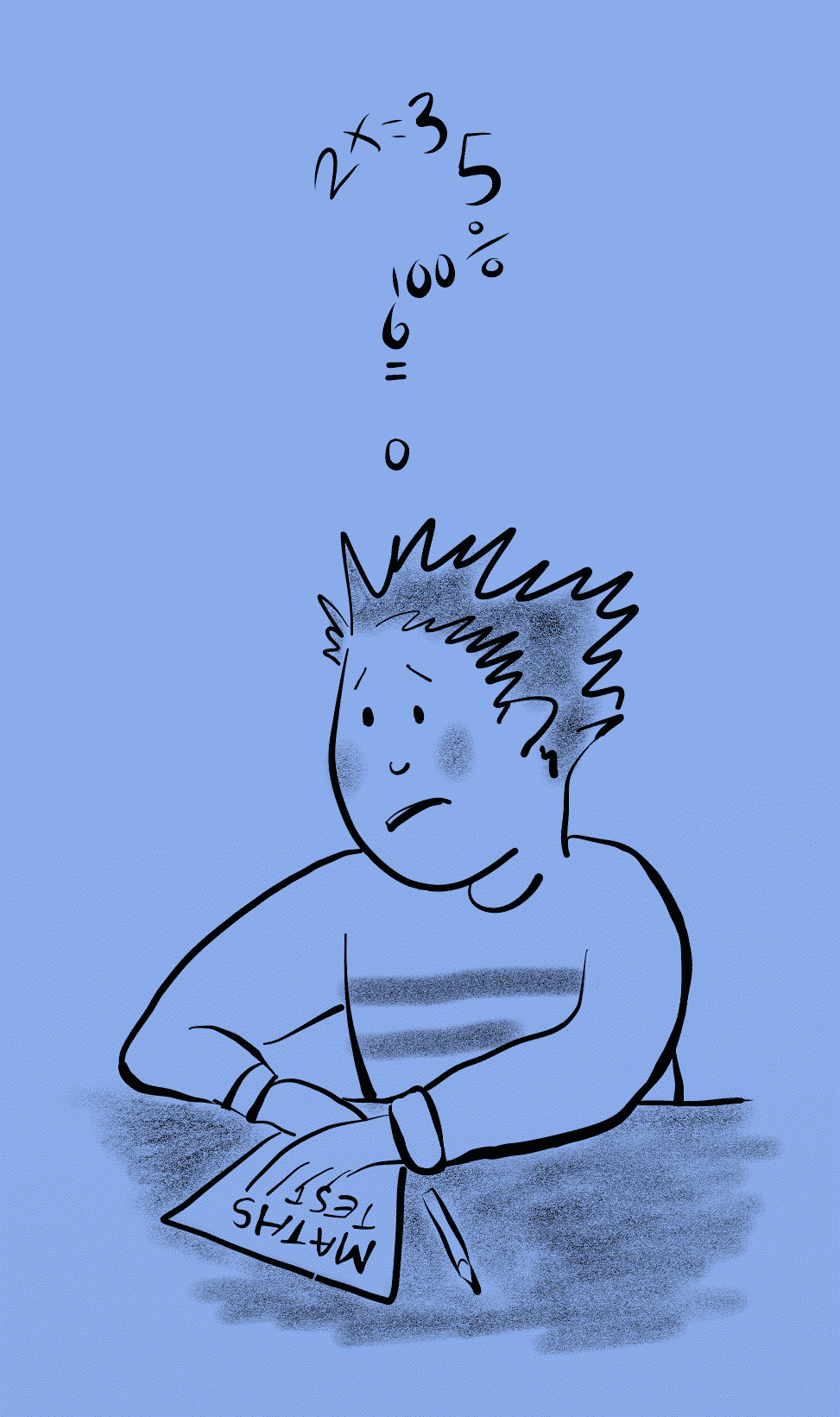
Mathematics – even the word makes me sweat. Trying to say dyscalculia sends me into a tailspin.
At school, I had a very old-fashioned maths teacher who sat his pupils according to their latest test results.
Talk about pressure!
Maths tests were hell for me, and I became an expert at copying answers from my neighbour.
I now appreciate I have dyscalculia and dyslexia.
50-60% of people with dyslexia have difficulty with maths.[1]
Dyscalculia is a difficult word
Dyslexia is a tricky word to spell, but I find dyscalculia an impossible word to say. If you also have this problem, breaking the word down helps
dis-kal-kyoo-lee-uh .
dys + calcul(ate) + ia which makes sense as it means a difficulty (dys) with calculation (calcul).
What is Dyscalculia?
The Child Mind Institute website offers this definition:
Dyscalculia is a term used to describe specific learning disabilities that affect a child’s ability to understand, learn, and perform math and number-based operations.
It is important to note that not all problems with mathematics are caused by dyscalculia. Other specific learning difficulties, such as visual processing, auditory processing, and ADHD, can impact a child’s performance in mathematics.
How does dyscalculia present at different ages?
A child in preschool may:
- have trouble learning to count and skips over long numbers
- not understand the meaning of counting
- struggle with concepts such as ‘smallest’ and ‘largest’
- find it hard to recognise numbers, e.g., 3, 4, 5 …
- not link a number to a group of objects, such as 4 cars or 5 books
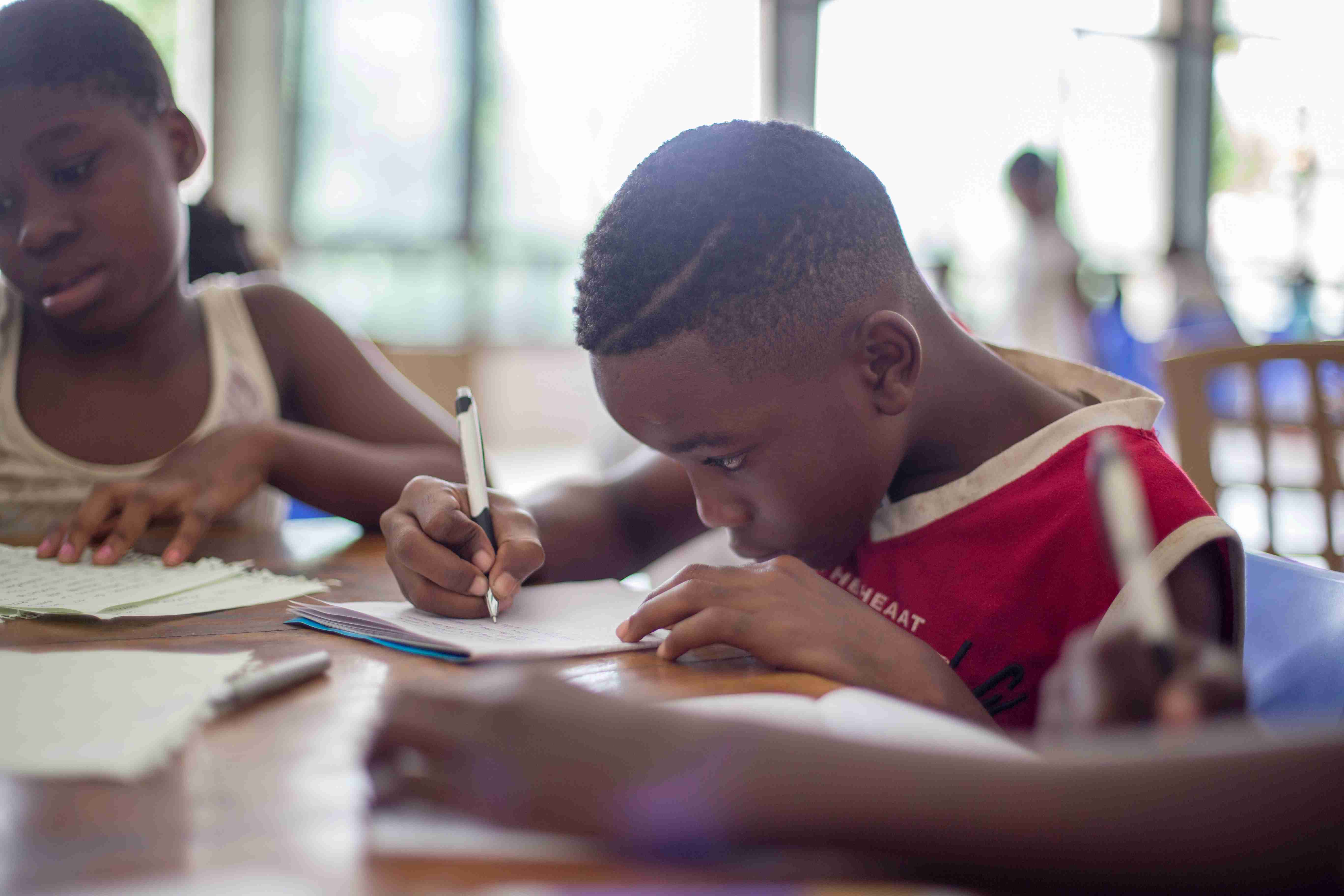
A child in primary school may:
- find it hard to recall basic maths facts or do simple addition or subtraction
- use fingers to count rather than doing sums in their head
- often put numbers in the wrong place or column
- not understand the symbols greater than > and less than <
- reverse numbers and mathematical symbols
- find it hard to connect the number symbol to the word, i.e., 3 the three
- not be able to give the number before or after a large number
- not understand the value or worth of large numbers
A child in intermediate school may:
- avoid maths games
- struggle to understand maths concepts, e.g., 3+6 is the same as 6+3
- not be able to keep score in sports
- find it difficult to handle money and work out change
A student in high school may:
- finds it difficult to make accurate measurements
- get easily lost and struggle to estimate distance or time
- struggle to understand charts and graphs
- struggle with the concepts and workings of algebra
- find it impossible to understand different approaches to solving the same maths problem
What to do if you suspect your child has dyscalculia
-
Talk to your child’s teacher to determine which aspects of maths cause the most difficulty and discuss what strategies seem to help. Ask if your child is also struggling in non-maths subjects. It is essential to get an accurate picture of all your child’s learning difficulties.
-
Book an appointment with an audiologist and a behavioural optometrist to determine if auditory and visual processing issues are contributing to the problem.
-
Consult a specialist in specific learning disabilities for an evaluation and receive detailed feedback on your child’s needs.
The impact of dyscalculia
As with all specific learning difficulties, dyscalculia exists on a continuum. If it is mild, it may not have a significant impact on your child’s life. I passed my maths exams (only just!) with no extra tuition (back then, who knew such a thing existed?). I am not the ‘go-to parent’ for our children’s maths homework, but I have never been overdrawn on my bank account, and I pay our bills on time.
If it is severe, it may make everyday tasks such as telling the time or reading timetables impossible.
People with dyslexia and dyscalculia develop coping strategies. In maths class at school, I copied my friend’s answers to get through. The good news is that there is excellent specialist help today for children with dyscalculia.
Dyscalculia and multiplication tables
I can still remember the nightmare of trying to learn my multiplication tables. These days there are some great resources that use stories. These are perfect for visual learners. I wish they had been around when I needed them.
https://www.multiplication.com/teach/teach-the-times-tables
or
The Department for Education and Skills in the UK has produced an excellent resource for maths lessons, which contains some very helpful information. http://scotens.org/sen/resources/dyslexia_leaflet_maths.pdf
Here is my blog post about teaching the times tables by using stories.
Have you found any helpful resources for a child with dyscalculia?
[1]Dekker B (n.d.) Mathematics; dyslexia and dyscalculia. http://www.dyslexiasa.org.au/wp-content/uploads/2015/12/Maths.pdf
_________________________________________________________________________________________
To read how to teach spelling and reading in 30 minutes a day, click here.
I taught my son to read and spell in 30 minutes a day. Here are my affiliate links to the resources I used, All About Spelling and All About Reading.
If your child also struggles to learn the multiplication tables, check out this blog post on how using stories will help them remember the facts.